Research at Scale
Cut UX research turnaround by 50% — by building research guidelines and AI-integrated synthesis workflows for Procore's cross-functional product teams.
make rigorous UX research accessible and actionable for designers and PMs who don't have a research background — across multiple product verticals simultaneously?
Research was siloed inside the research department. Designers and PMs either waited weeks for research outputs or made decisions without them. The bottleneck wasn't data collection — it was the gap between sessions and actionable insight.
AI tools were available across the organization but unused in any structured research workflow. There were no standardized guidelines enabling designers or PMs to self-serve research at a quality bar the team could trust.
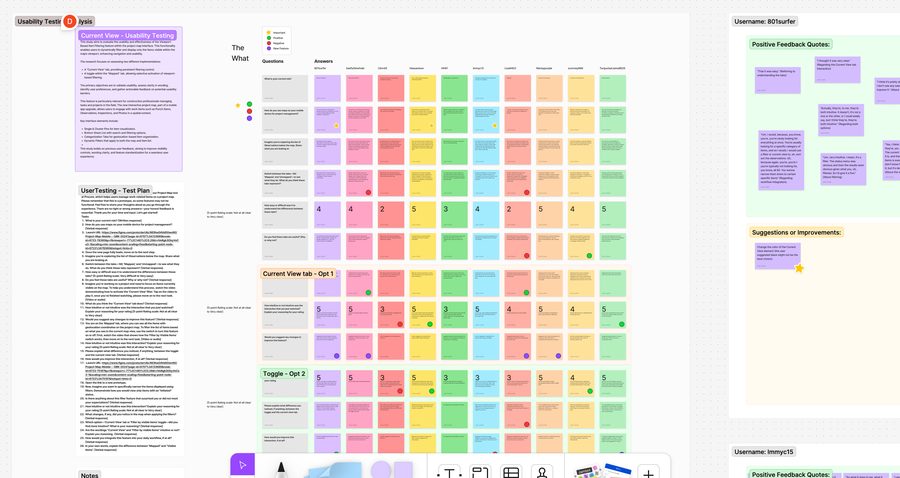
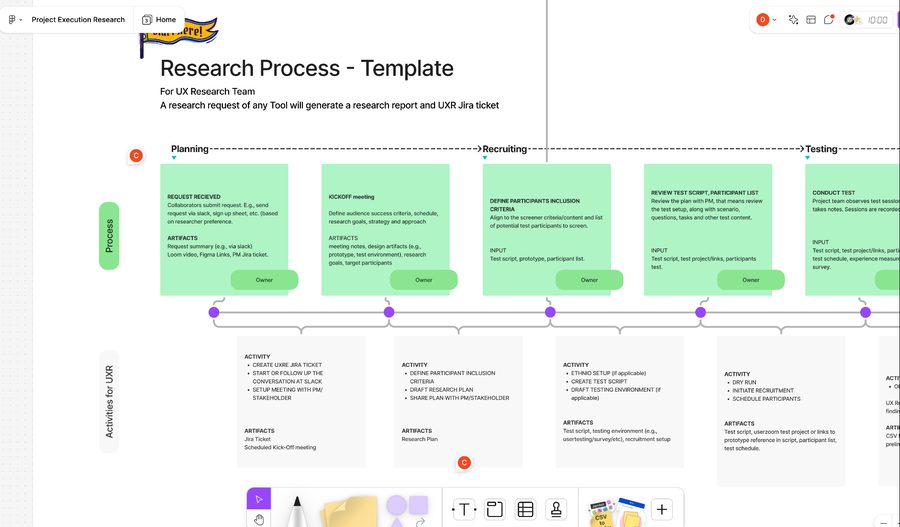
Built research guidelines enabling designers and PMs to self-serve qualitative research without a research background — covering study design, recruitment via Ethnio, session facilitation with UserTesting.com, and synthesis standards.
Introduced AI-assisted synthesis to close the gap between raw sessions and insight delivery. Established cross-functional feedback loops so research findings moved into product decisions in days, not weeks. Deployed across multiple verticals simultaneously.
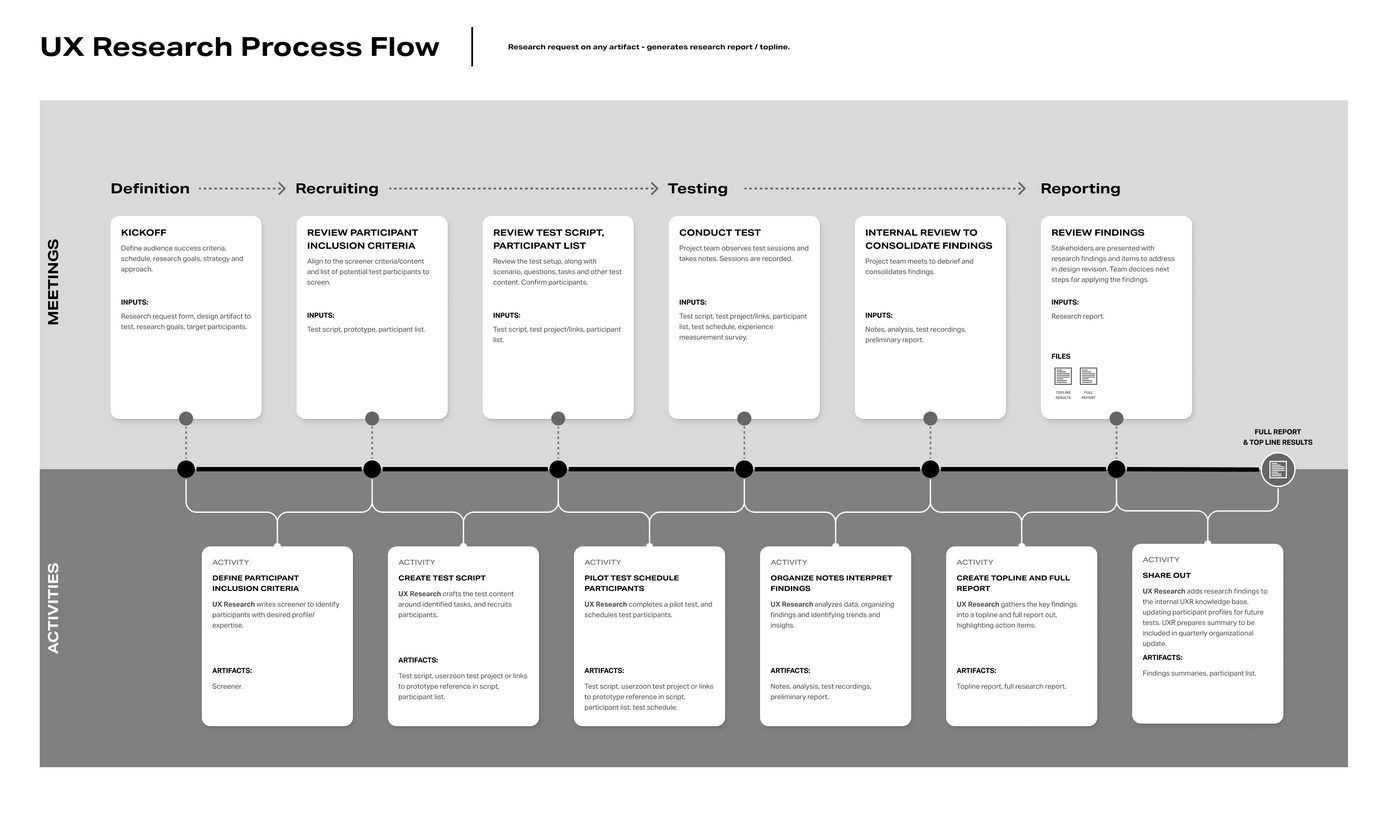
Research Process — Definition to Insight
Four-phase research framework built to enable designers and PMs to self-serve UX research without a research background. AI synthesis closed the gap between sessions and actionable insight. Hover each phase.
I introduced AI-assisted synthesis because the bottleneck wasn't data collection — it was the time between sessions and actionable insight. AI cut that gap without reducing quality when paired with human judgment at the interpretation layer. Speed without shortcuts.
The best outcome wasn't the speed improvement — it was the cultural shift. When designers started asking 'what does the research say?' before writing a user story, the work had done what it was meant to do. Process adoption is the real design deliverable.