Metaverse Experience
Designed a metaverse experience that attracted 1,500+ virtual visitors — by solving spatial storytelling for a European tech convention without physical constraints.
design a metaverse experience engaging enough to hold attention without a human guide — for a major European tech convention?
A physical convention means one location, a fixed audience, and a time window that closes. The brief was to remove all three constraints — but doing so introduced new problems: without spatial affordances, how does a visitor know where to go, what to explore, or how long to stay?
There was no internal process for spatial or metaverse design at SoftServe. No templates, no precedent, no established toolchain. The team had to figure out what "done" even looked like before designing for it.
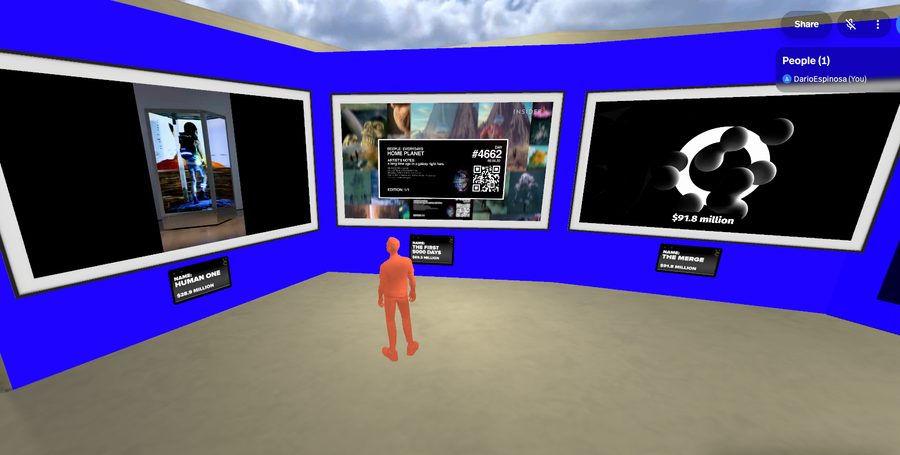
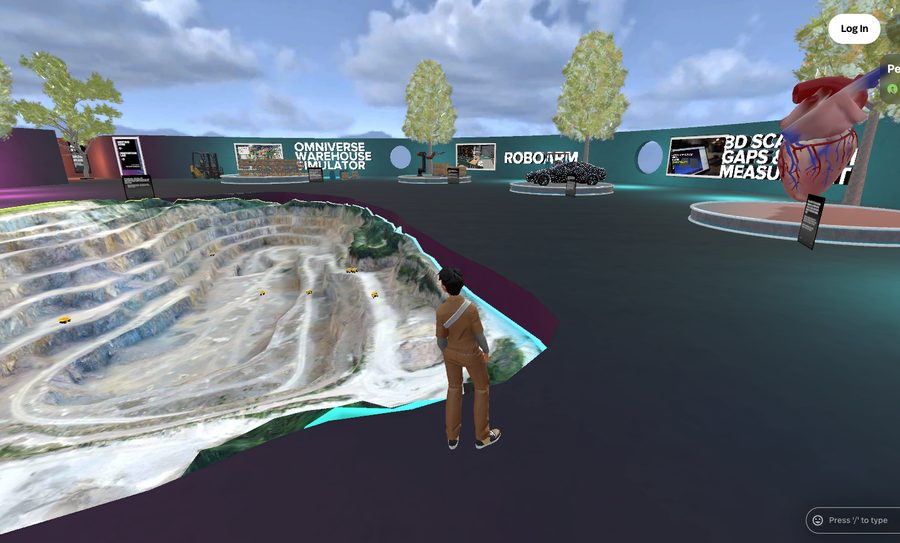
Designed the exhibition layout for Spatial + Unity, applying sightline principles borrowed from physical exhibition design to create natural navigation without explicit UI affordances. Visitors moved through the space because the space directed them — not because of labels or arrows.
Placed 3D interactive content at focal points, using SoftServe brand assets to create spatial consistency. The result felt branded without feeling like a trade show booth dropped into 3D.
Five Layers — From Platform to Visitor
The metaverse experience was designed as 5 distinct layers — from the Unity platform through spatial sightlines, branded content moments, and finally the visitor's self-directed journey. Hover each layer.
We prioritized spatial storytelling over information density. An early prototype was overloaded with content — stripped it back to 5 key moments. Engagement time increased significantly. In spatial design, less is more measurable than in any other medium.
Spatial design is fundamentally different from screen design — there is no scroll, no back button, no obvious hierarchy. Designing for presence, not just information. The mental shift from 'what does the user see' to 'where does the user look' changed every decision.