Life Coaching Platform
Transformed a book tour cancelled by COVID into a full digital platform built around a 7-area gamification framework, shaped directly by 50 user interviews.
transform an in-person book promotion experience into a digital platform that captures the same community and personal-transformation value, in 6 months?
COVID eliminated the physical event strategy overnight. The OolaLife brand had built its audience through in-person book tours and community gatherings, none of which could happen anymore. There was no digital strategy, no product, and a countdown clock.
The platform needed to serve two distinct user types: Ambassadors with premium access and management capabilities, and regular users seeking personal-growth accountability. Both needed the system to feel human, not transactional.
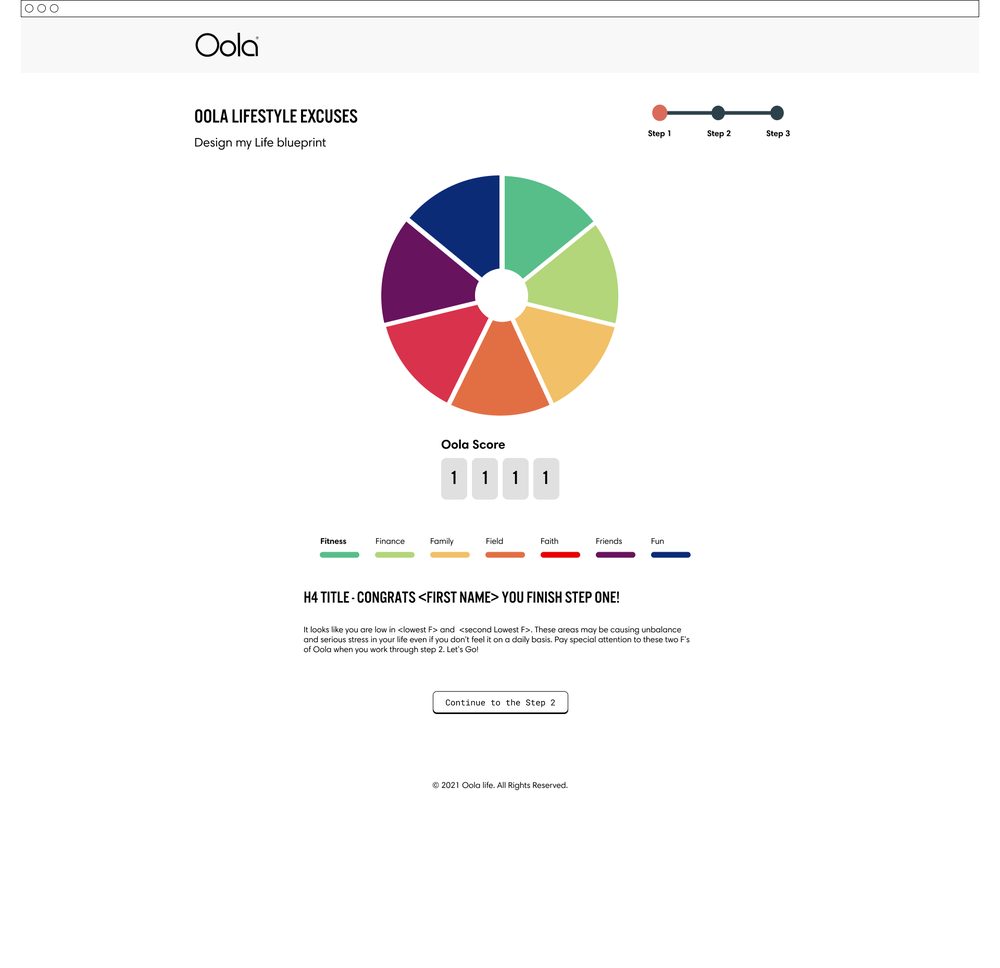
Seven Life Areas, One Digital Platform
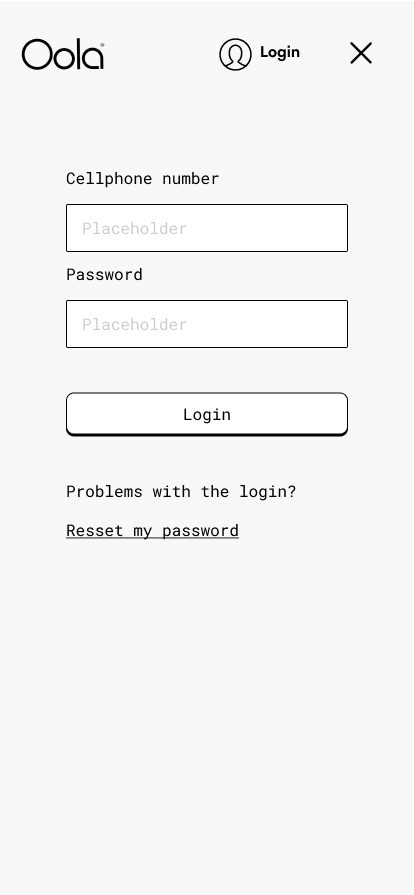
The founders initially didn't know where to start. They only knew they wanted everything online. Working closely with Dr. Dave Braun and Dr. Troy Amdahl, I defined two interconnected products: a marketing website and a web app with eLearning sections, Ambassador and Coach roles, login, progress tracking, and enrollment built in.
- MVP platform with user enrollment and Ambassador & Coach role hierarchy
- Articles per unit + activities for long-term, monthly, and weekly goal tracking
- Daily Action Steps with built-in accountability and weekly retrospectives
- Dashboard as the main profile page, with progress visible at a glance
- 7 Key Areas: Fitness · Finance · Family · Field (career) · Faith · Friends · Fun
Target audience: Women aged 30–60, high tech literacy, interested in personal development, networking, and Young Living. Competitor references studied: bigskyhealth.com, mindvalley.com, zerofasting.com.

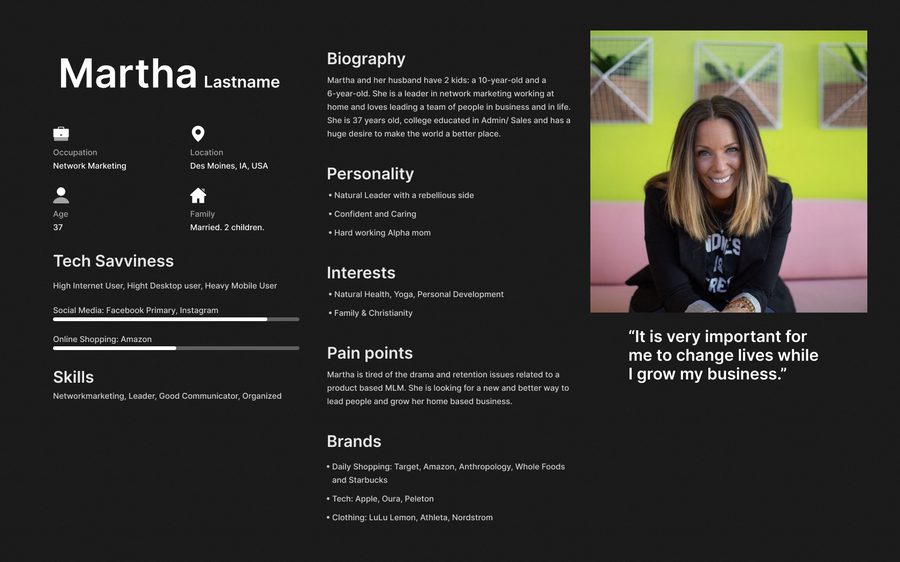
Conducted approximately 50 user interviews to define 4 key personas, primarily women aged 30–60 with high tech literacy and strong motivation for personal growth. Research showed accountability mattered more than content quantity.
Designed a gamification system, built from streaks, rewards, progress tracking, and daily action steps, that replicated the social accountability of in-person events. Collaborated directly with clients in live Miro + Figma sessions to compress decision cycles and meet the 6-month deadline.
From Whiteboard to Wireframe
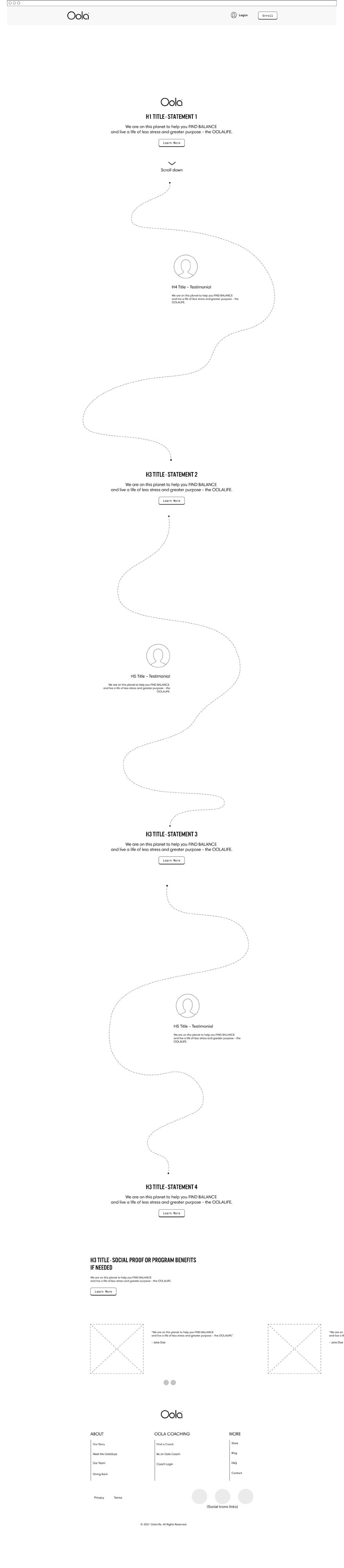
The primary user journey started at the marketing website and ended at the application. MindValley served as the indirect benchmark. The founders admired its content depth and future-forward positioning, which shaped early explorations of structure and interaction.
- 4 personas co-created directly with Dr. Braun and Dr. Amdahl through collaborative sessions
- Extensive whiteboarding using customer-centric and Design Thinking methodologies
- UX flow maps, wireframing, Information Architecture definition, sitemap, and MVP task scoping
- Mobile-first approach with breakpoints defined early in process
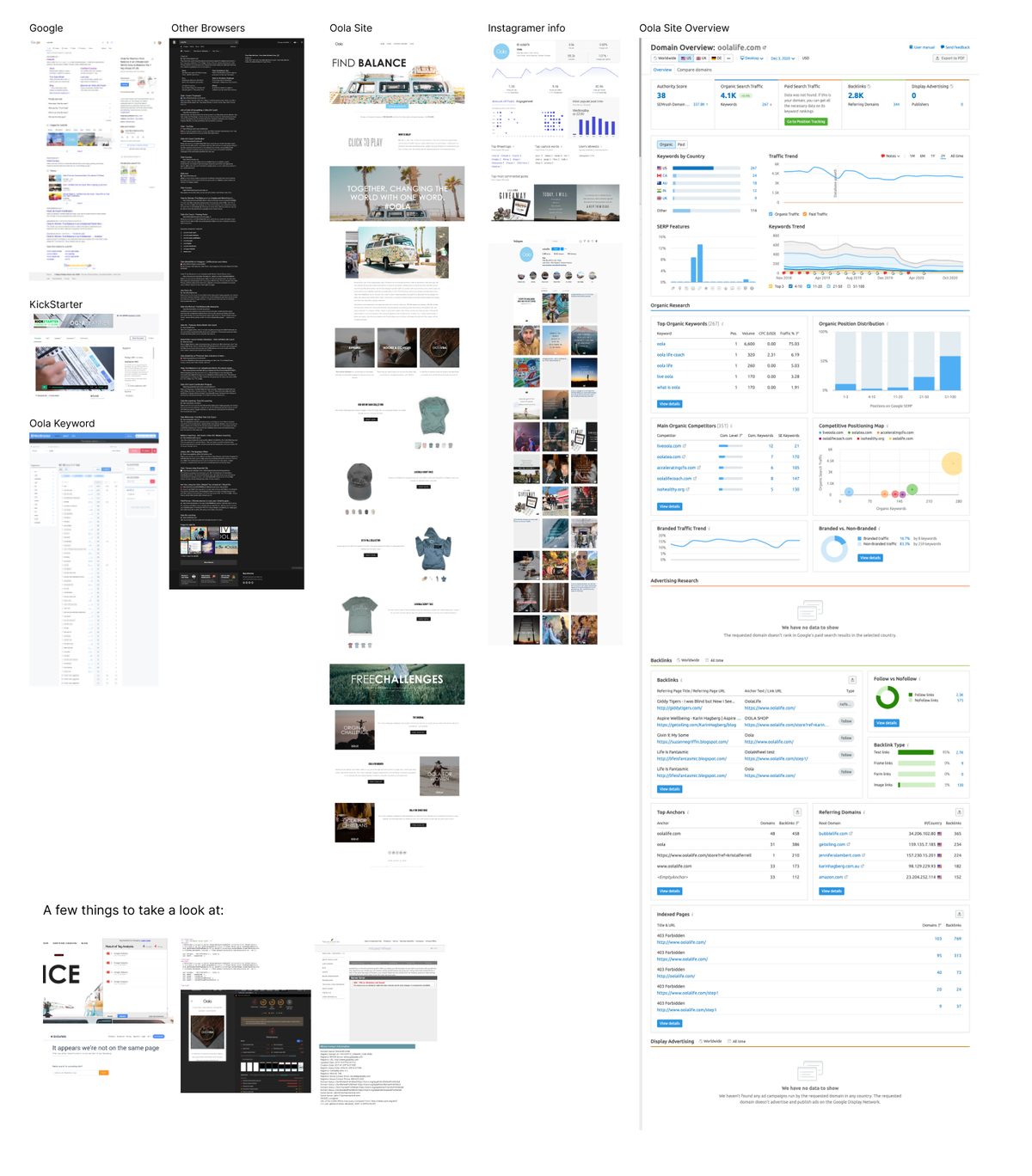
- Oola had organic growth across multiple domains, so we identified a consolidation opportunity for SEO and brand coherence
- SEO strategy and Google Analytics fixes scoped alongside design work
- Accessibility audit and code-level fixes identified and documented
- When the marketing firm joined, aligned digital style guides with their team and Frontend devs
- Handed off to another designer for final delivery; stayed available to close gaps
Six Months — Crisis to Launch
Momentum arc across the 6-month project. Each point marks a real milestone, from COVID crisis to the key insight that reshaped the product (accountability > content) to MVP launch. Hover each point for context.
The gamification system was a deliberate bet. Research showed the audience valued accountability above content quantity. They didn't need more to read, they needed a reason to show up tomorrow. The streak mechanic was the product insight, not the feature.
Building for an audience that doesn't know they need digital is a different UX challenge than building for tech-native users. You end up teaching people a new language as much as solving a problem for them. The onboarding flow was more important than any individual feature.